
Mental Health & Faith
She Got Prayer. She Needed a Conversation. Faith and Mental Health in the African Diaspora
There is a woman named Wanjirũ who raised her hand for prayer, and the whole room said amen. Nobody asked her how she was sleeping.
 Kĩriakũ wa Kĩnyua5 min read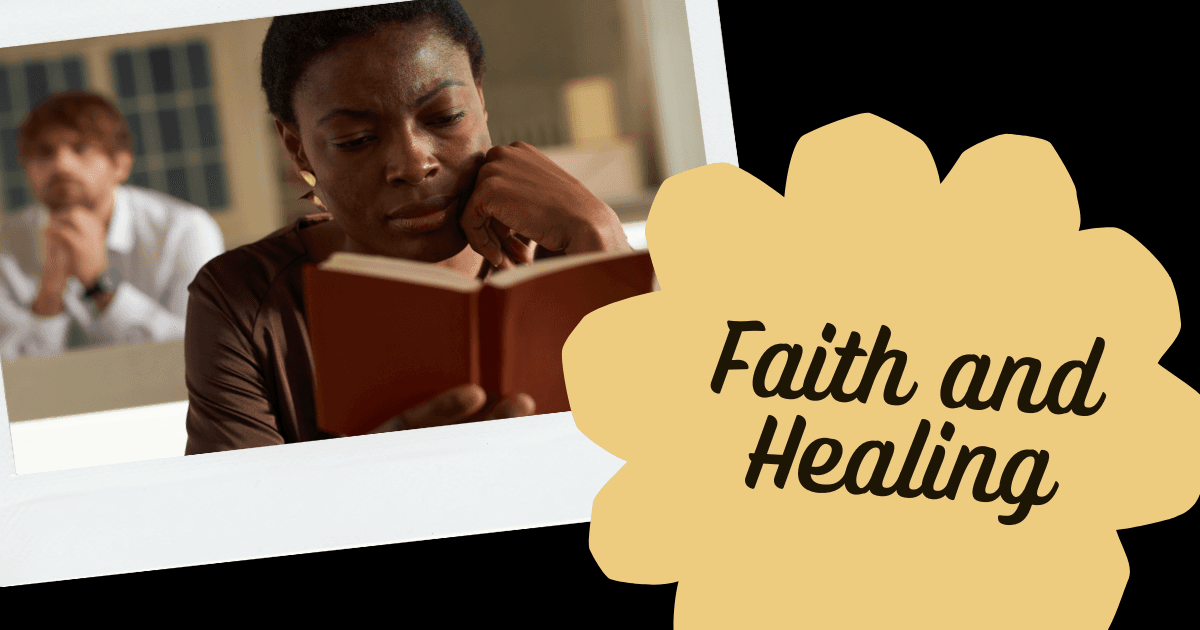
There is a woman named Wanjirũ (Wah-njee-roo). She sat in the third row of a church in a cold city far from home, and when the pastor asked for prayer requests, she raised her hand and said her son was struggling. The room said amen. Hands went up. Someone prophesied breakthrough. And then everyone went home for pilau and left her exactly where she started.
Nobody asked her how she was sleeping.
I have watched this scene play out in living rooms in Boston, church basements in Manchester, and WhatsApp groups that stretch from Nairobi to New Jersey. We are very good at praying for each other. We are not good at asking each other real questions. And somewhere between those two things, people we love are quietly falling apart.
Here is the lie we inherited and carried across the ocean: that a strong faith and a struggling mind cannot live in the same body. That if you were really trusting God, you would not be anxious. That depression is a spirit to be cast out, not a condition to be treated. We packed this belief into our suitcases along with the njahĩ and the family photos, and we have been feeding it to our children ever since.
The cost is not abstract. Younger people in our communities have learned to go quiet. Research on African and Afro-Caribbean families keeps finding the same thing, that young people fear telling their parents what is happening in their heads because they expect to be misunderstood or brushed off. So they scroll instead of speaking. They perform fine at the family function and cry in the car afterward. And the gap between how they look and how they feel gets wider every year until something breaks.
I want to be careful here, because it would be easy to make this the church's fault and walk away feeling clever. That is not honest. For most of us, the church was the first place that ever held us. When my parents landed with two bags and no plan, it was other Kenyans in a rented hall who found them a mattress and a job. Faith was not the problem. Faith was the reason we survived at all. So I am not asking anyone to trade prayer for therapy like it is an upgrade. I am saying prayer was never meant to be the whole conversation.
Look at how Jesus actually moved. When he met people in pain, he asked them things. What do you want me to do for you. He touched people the culture said not to touch. He did not rush the hurting toward a testimony. He sat in the mess with them first. Somewhere along the way we turned faith into a highlight reel, all victory and no valley, and we forgot that the Psalms are full of people yelling at God from the floor. David did not fake being fine. He wrote his breakdown down and put it in the songbook.
So what changes when the church stops going quiet?
A pastor in Jacksonville started calling it good neighboring. Simple idea. People checking on each other, on purpose, out loud. His whole point was to break the old belief that mental struggle should be handled in silence or through prayer alone. Another pastor put it plainly, that it is okay to take your pain to God and also okay to find a person to talk to about your struggle. Trauma-informed ministry asks a different question than the one we grew up with. Not what is wrong with you. What happened to you.
That one change moves everything. Because the moment the question changes, the shame drops. And shame is the real killer here, not the sadness itself. Shame is what keeps Wanjirũ's son from telling his mother. Shame is what makes a grown man sit in a pew every Sunday and never once say he has been thinking about not being here anymore.
Here is the reframing, and I want you to actually hear it. Faith is not pretending you are fine. Faith is telling the truth about how bad it is and refusing to let go of God while you say it. Those are not opposites. The bravest prayer is not I am blessed and highly favored. The bravest prayer is I am not okay and I still believe you are good. If your faith cannot hold that sentence, it was never strong. It was just untested.
Now the practical part, because reframing without action is just a nice feeling that fades by Tuesday.
This week, ask one person one real question and then stay quiet long enough to hear the answer. Not how are you, because we have trained each other to lie to that one. Ask something they cannot dodge. How have you actually been sleeping. What is the thing you have not told anyone. Then do the hardest thing we do, which is nothing. No fixing. No verse. No advice. Just presence. Let the silence sit there until they fill it. Most people in our community have never once been asked and then given room to answer. You could be the first.
If you are the one struggling, this is for you too. Talking to someone who is trained to listen is not a failure of faith. It is stewardship of the mind God gave you. You would see a doctor for a broken arm without wondering if it meant you did not trust God. Your mind deserves the same seriousness. Prayer and a counselor are not rivals. They are both mercy, arriving through different doors.
Wanjirũ's son did eventually talk. Not because someone prophesied over him. Because one auntie in that same church pulled him aside months later, handed him a plate, and asked him a question nobody else had thought to ask. He is still here. She probably does not know what she did. That is usually how it works.
The church does not need a new program to save its people. It needs to get quiet in a different way. Less quiet about the pain. More quiet after the question.
If this hit something in you, that is the point. We make radio, conversations, and community for Kenyans far from home who are done pretending. Come sit with us at radiokenyaunited.com. The door is open, and nobody here is going to ask you to be fine.