
Mental Health & Faith
The Silence Nobody Names: Kenyan Diaspora Mental Health and the Faith That Was Supposed to Fix It
The weight Kenyans in the diaspora carry isn't dramatic. It isn't visible. It's just weight — and faith doesn't always make it lighter.
 Kĩriakũ wa Kĩnyua5 min read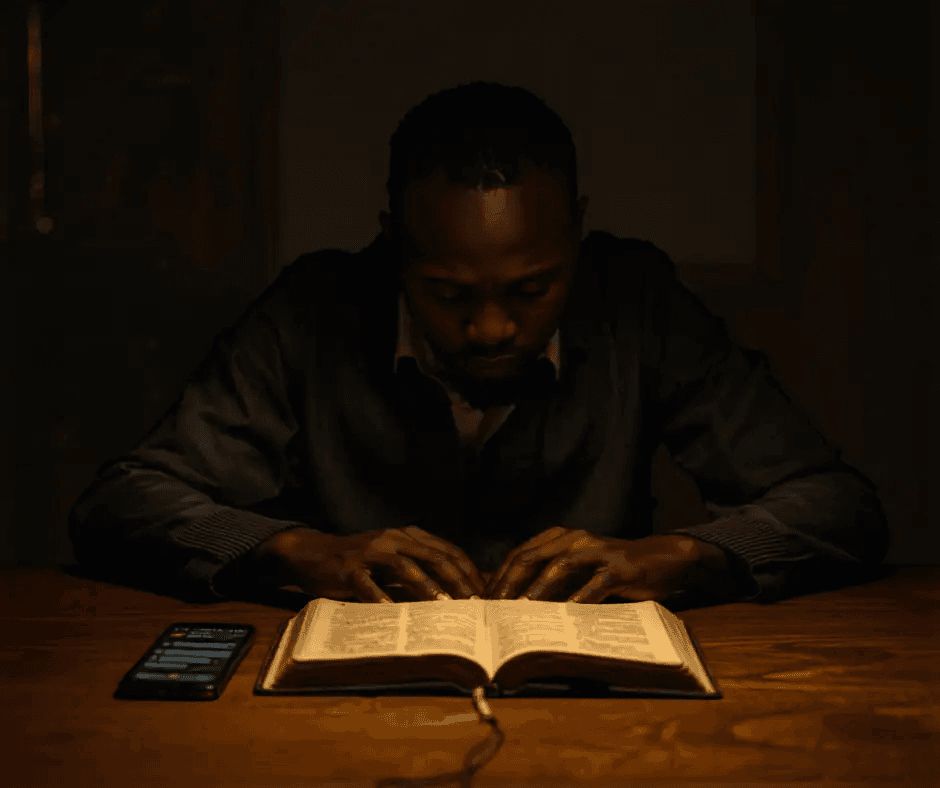
Daniel has led worship at his church in London every Sunday for three years. He knows every chord change in "Bwana Nakushukuru." He knows when to hold the last note and when to let it fall. He knows how to carry a congregation into a moment of surrender.
He has not slept a full night in four months.
Not because of failure. Not because of sin. Because of the specific, quiet weight that most Kenyans in London — in Manchester, in Dallas, in Toronto — carry around with them like a second suitcase nobody told them to pack.
His mother called on Thursday. Rent is due, she said. The younger sister's school fees. His father's medication. He sends what he can. Then he sits at his kitchen table at 11PM, and the numbers don't add up. And faith — the faith he publicly carries, the faith he leads people into on Sunday morning — doesn't make the numbers add up either.
This is Kenyan diaspora mental health. Not dramatic. Not visible. Just weight.
The Lie Told Before the Flight
Before Daniel left Nairobi, somebody told him a clean version of the story. Work hard, build something, make the family proud. Send money home. God will provide.
Nobody told him that "God will provide" is a sentence that lands differently at midnight when the provision hasn't come yet. Nobody told him he'd become the emotional anchor for a family back home while simultaneously drowning in a country that doesn't know his grandmother's name.
This is the cultural lie underneath Kenyan diaspora mental health: that we left to succeed, so struggling is failure. That faith should make it manageable. That if you're cracking under the weight, it means you're not praying enough.
So Daniel keeps leading worship. Because the alternative — telling the truth — feels like letting everyone down.
The Faith Tension
Here's what faith asks of Daniel: trust. Surrender. Peace that passes understanding.
Here's what the diaspora delivers: financial pressure that doesn't respond to surrender. Loneliness that doesn't dissolve in worship. Homesickness that doesn't have a verse for it.
And in that gap — between what faith promises and what displacement delivers — something happens to a lot of Kenyan Christians abroad. They stop saying how they actually are. They perform wellness. They use the language of faith to hide the reality of suffering.
"I'm trusting God" becomes the socially acceptable way to say: I am not okay, but I don't have a safe place to say that here.
The faith community often makes this worse without meaning to. When church becomes the place where you must show up whole, people who are breaking arrive and perform wholeness — and leave more alone than when they came.
The Mental Health Cost
Let's name what this actually does to a person.
The research on Kenyan diaspora mental health is not ambiguous. Kenya's diaspora affairs ministry has documented the specific psychological toll of migration: elevated rates of anxiety, depression, and stress-related illness among Kenyans living abroad. This is not weakness. This is the documented cost of carrying two worlds at once.
But documentation doesn't sit with you at 11PM.
What 3AM needs is not a pamphlet. It's not a therapist with no cultural frame of reference. It's a voice that understands what it means to be the firstborn in a Kikuyu family living in a flat in Brixton, carrying everybody's expectations and nobody's understanding.
Daniel found that voice on a Tuesday night. He wasn't even looking for it. He typed "Kenyan radio online" into his phone just to have something in the room with him. He landed on Jirani After Dark — a late-night show on Radio Kenya United that broadcasts specifically for this hour.
The host said something he hadn't heard in three years of church attendance: "Faith isn't pretending things are fine. Faith is telling the truth and still standing."
He cried for twenty minutes. Not because he was fixed. Because something had finally been named.
The Reframing
Kenyan diaspora mental health is not a faith problem. It is a silence problem.
The grief is real. The pressure is real. The loneliness is documented, structural, and chronic. The mistake is deciding that faith means you shouldn't feel any of it.
Psalm 88 ends without resolution. The psalmist is still in the dark on the last verse. Nobody healed him. Nobody gave him a three-point plan. He just kept speaking — into the dark, to a God he still believed in even while feeling abandoned.
That is faith. Not the performance of fine. The practice of honesty in the presence of God.
The reframing is this: your mental health is not evidence that your faith is broken. It is evidence that you are human, that you love your family, that displacement is real, and that you have been carrying more than you were designed to carry alone.
One Practical Action
Find a space where you don't have to perform wellness.
That might be a counselor who understands migration and cultural identity. It might be a community like Jirani Connect, built specifically for people who are done pretending to be fine. It might be a late-night broadcast that says your name — not your real name, but the name of your exact experience — out loud.
Radio Kenya United runs Jirani After Dark for exactly this: a show designed for the night when faith and exhaustion are sitting in the same room. No fixes. No platitudes. Just a voice that already knows where you are.
Immigrant faith struggles don't need cheerful solutions. They need honest company.
What Changed
Three months after that Tuesday, Daniel is still in London. He still leads worship on Sundays.
But something shifted. He told his pastor about the sleepless nights. He found a counselor through a Kenyan community network. He comes to Jirani After Dark two or three nights a week now — not because he needs rescuing, but because he needs a room where nobody expects him to have it all together.
The weight is still real. But it is no longer a secret.
That is not a dramatic ending. But Kenyan diaspora mental health does not need drama. It needs acknowledgment. It needs a community that tells the truth. It needs a voice that understands what you're carrying.
You don't have to be broken to need that. Follow Radio Kenya United. The signal is always on.