Community
What Kenyan Diaspora Radio Gave Me That Nothing Else Could
It was a Tuesday night in Seattle. Wanjiru sat on the kitchen floor and didn't move. She wasn't looking for inspiration. She was looking for a voice.
 Kĩriakũ wa Kĩnyua4 min read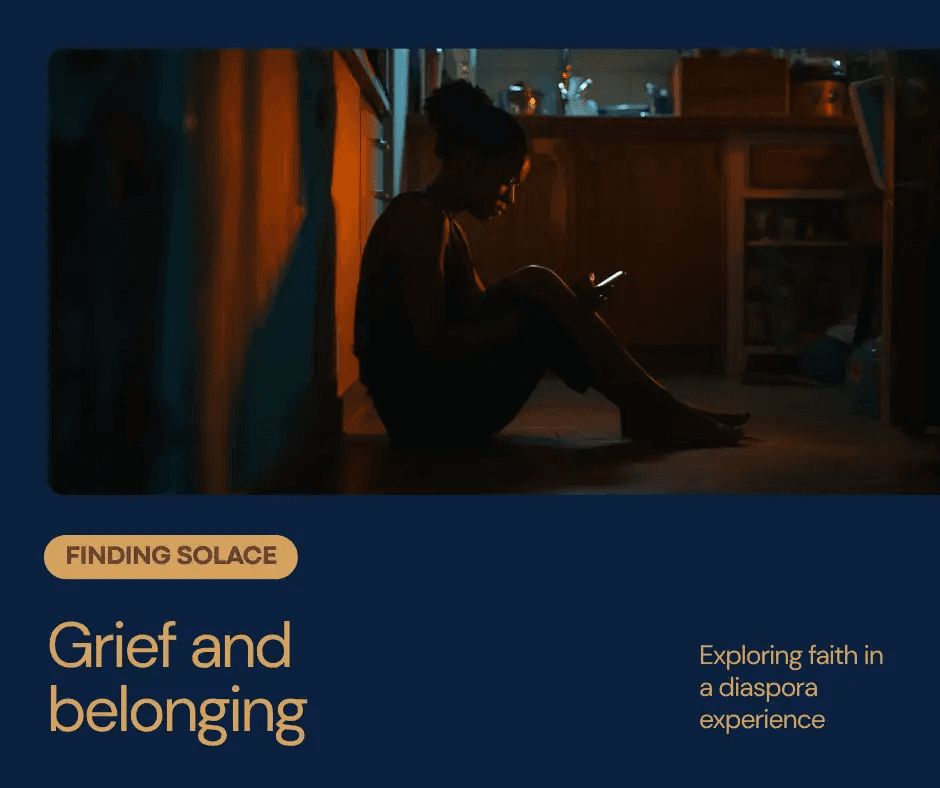
It was a Tuesday night in Seattle. Wanjiru had been on the phone with her sister for forty minutes, and when she hung up, she sat on the kitchen floor and didn't move.
Her mother had been sick for seven months. The airfare home was $1,400 she didn't have.
She wasn't looking for inspiration. She wasn't looking for a sermon. She picked up her phone because silence felt too heavy, opened a browser, and typed something she'd been putting off searching: Kenyan radio online.
What she found was a voice.
Not a news anchor. Not a playlist with no context. A voice — in Gĩkũyũ (Gee-koo-yoo) and English — talking about exactly what she was sitting in. A late-night show called Jirani After Dark. A host who said, quietly, "If you're awake right now and you're carrying something you can't put down yet — stay. This hour is for you."
Wanjiru sat on that floor for another two hours. She was no longer alone.
The Lie Told Before the Flight
Before Kenyans board that plane, somebody tells them a version of the same story. You're going to build something. You're going to send money home. You're going to make the family proud.
Nobody tells you that you'll become a stranger in two places at once.
Nobody tells you that Sunday mornings will feel like grief. That you'll sit in a church where nobody knows your name in Gĩkũyũ and feel more alone than you felt before you walked in. That the very faith you carried with you will start to feel like it was calibrated for a place you no longer live in.
This is the unspoken weight of diaspora life. It doesn't go away with time. It just gets heavier and quieter.
What Faith Demands vs. What Displacement Delivers
Here's the tension: faith asks you to trust. And displacement, in the same breath, asks you to doubt everything.
Trust that God is present in Seattle, in London, in Toronto. Doubt whether this cold, fast, polite country has room for the version of God your grandmother taught you.
Trust that your purpose travelled with you. Doubt whether you belong anywhere.
Trust that prayer works. Doubt whether anyone on the other end is tuned to your specific grief.
That gap — between what faith promises and what displacement delivers — is where a lot of Kenyan Christians are sitting quietly, not saying anything, because saying it out loud feels like weakness. Or worse: like losing faith.
The Mental Health Cost Nobody Is Counting
Kenya's diaspora affairs office has published on this. The mental health impact of migration is documented, real, and under-resourced.
But documentation doesn't fix 3AM.
What 3AM needs is a voice that sounds like home. Not a therapist with a pamphlet. Not a generic Christian app. A voice that uses the right words. That understands what it means to send money home when you don't have enough. That knows what it costs to be okay on paper.
This is what Kenyan diaspora radio — real Kenyan diaspora radio — does that nothing else does.
It puts a voice in the room that carries the cultural frequency of home. It says, in Swahili and Gĩkũyũ and English in the same sentence, that you don't have to translate yourself here. That your grief is named. That your language is welcome.
No code-switching required.
The Reframing
Faith doesn't require you to stop missing home. It doesn't ask you to replace your roots with the country you now live in.
The disciples were scattered across the known world. Paul wrote his most grounded letters from a prison cell. The psalms were written by people who had been uprooted from everything familiar.
Displacement is not a spiritual failure. It is one of the oldest human conditions. And it has always been a place where people encounter God in ways they couldn't at home.
The grief of the diaspora is not a sign that your faith is broken. It's a sign that you love — your country, your family, your culture, your God. Love that deep is worth sitting in, not fixing.
One Practical Action
Find a sound that speaks your language. Not metaphorically. Literally.
Radio Kenya United broadcasts 24/7, including Jirani After Dark, The Baraza, and Silent No More — shows built for the exact moment Wanjiru was sitting in. Each one made by people who understand the particular texture of this life.
Find the show that sounds like someone who already knows your name. Then stay.
What Changed
Wanjiru's mother passed three weeks after that Tuesday night. She wasn't able to fly home in time.
She came back to that signal every night for the month that followed. And something shifted — not the grief, but her ability to hold it. To grieve as a woman of faith, not as someone pretending everything was fine.
Six months after that kitchen floor, she was the one in the comment section at 2AM, typing to a stranger: "You're not alone."
This is what Kenyan diaspora radio, at its best, actually does. It doesn't fix anything. It makes the carrying possible.
If you're displaced, searching, and awake at the wrong hour — find us at radiokenyaunited.com. We broadcast for exactly this moment.