
Culture & Faith
Someone Has to Keep Counting: Kenya, Faith, and Accountability Journalism in 2026
There is a woman in Nakuru I keep thinking about. Call her Wanjiru. Every Sunday after church she buys the Daily Nation from the same vendor, folds it under her
 Kĩriakũ wa Kĩnyua5 min read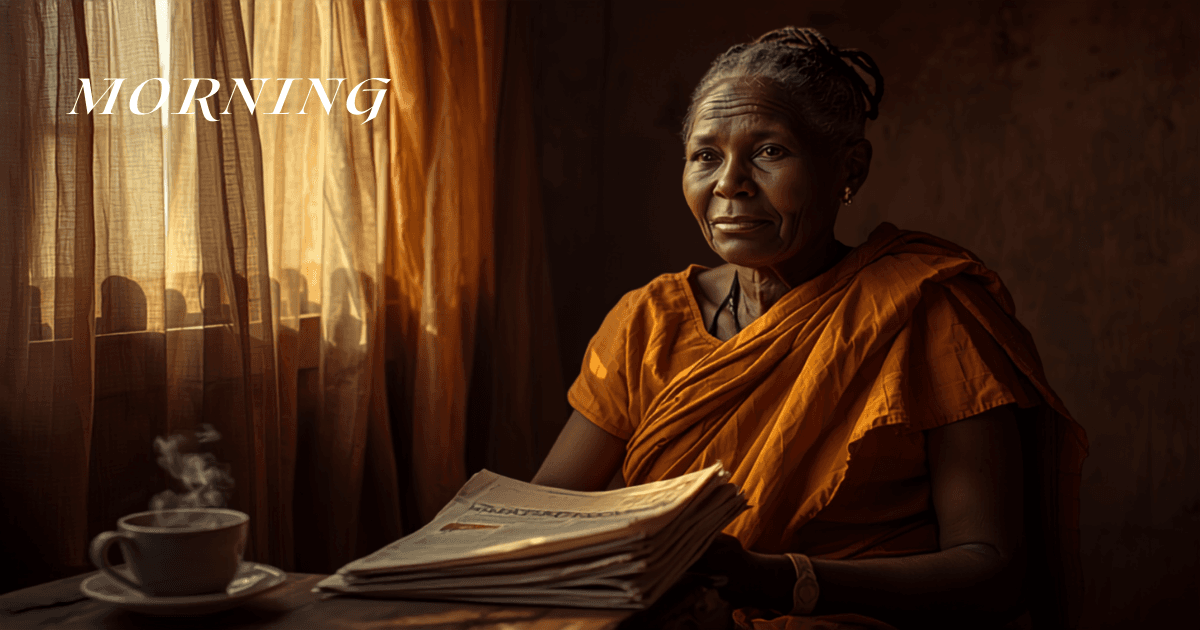
There is a woman in Nakuru I keep thinking about. Call her Wanjiru. Every Sunday after church she buys the Daily Nation from the same vendor, folds it under her arm, and reads it slowly over tea. She is not reading it for entertainment. She is reading it to check whether the people she voted for actually did what they promised. To her, that newspaper was a receipt.
This year the receipt changed hands.
When the news broke that Nation Media Group had passed from the family that held it for more than sixty years into the hands of a Tanzanian businessman with close political ties across the region, Wanjiru did not write a thread about it. She just went quiet. She kept buying the paper. But she started reading it differently. Slower. Watching for the day the receipt would start lying to her.
That quiet is the story. Not the sale. The quiet.
But here is the tension most people skip. The problem was never one owner or one newspaper. The problem is what happens inside a person when the thing they trusted to count the truth suddenly belongs to the people it was supposed to be counting. You do not lose faith in journalism in one dramatic moment. You lose it slowly, one shrug at a time, until you stop expecting anyone to keep the books at all.
And this year the numbers got heavy. Press freedom groups reported that more than four in ten Kenyan journalists faced legal threats, surveillance, or lawsuits used less like justice and more like a warning. Government advertising payments to newsrooms fell hundreds of millions of shillings behind, which is a quiet way to starve a watchdog without ever laying a hand on it. Reporters started thinking twice before covering protests. Not because the story stopped mattering. Because the cost of telling it went up.
So something shifted. Because the watchdogs got tired, the counting slowed. Because the counting slowed, the powerful relaxed. Because the powerful relaxed, ordinary people like Wanjiru were left holding a receipt they could no longer fully trust. That chain is how a country loses its memory. Not through one big theft, but through a thousand small forgettings that nobody wrote down.
Here is the cultural lie sitting underneath all of it. The lie says politics is a dirty river, you cannot clean it, so keep your head down, mind your own, and let the loud people shout. In the diaspora that lie wears a nicer suit. It says you left, so it is not your fight anymore. Send the money home, call your mother on Sunday, and let Kenya be Kenya. That lie feels like peace. It is not peace. It is surrender with good manners.
And there is a faith tension here too, one the church does not always want to name. We love the verses about being still and trusting God. We are quieter about the ones where God asks His people to do justice, to defend the cause of the weak, to not stay silent when the scale is rigged. Scripture does not tell you to stop counting. It tells you the God you serve is the God who sees what was hidden and brings it into light. Faith was never meant to be a reason to look away. It was meant to be the reason you can look straight at something ugly and not fall apart.
There is a Swahili word for what accountability journalism really does. Hesabu (Heh-sah-boo). It means to count, to reckon, to give an account. Someone has to keep the hesabu. Someone has to write down what was promised and check it against what was done. When the newsroom cannot, or will not, the job does not disappear. It just falls to us.
That is the mental health cost nobody puts on the front page. When you believe nobody is keeping count, you carry a low hum of powerlessness that never fully switches off. You doom scroll. You get angry at a screen at midnight. You feel guilty for caring and guilty for not caring more. Cynicism starts to feel like wisdom, but it is not wisdom. It is exhaustion wearing a clever mask. And a tired heart cannot tell the difference between accepting what it cannot change and abandoning what it still could.
So here is the reframing. Accountability is not a job you outsource to journalists and then judge from the couch. It is a habit ordinary people keep alive between elections. The reporter with the byline is one link. You, remembering what was promised, are another. When a whole community refuses to forget, no owner and no editor can fully bury a story, because the story is already living in people's mouths.
And here is the one practical thing you can do this week, wherever you are reading this from. Pick one promise. Just one. A road in your home county. A hospital that was announced. A fund that was launched with a big ceremony and has gone quiet since. Write down what was promised, the date, and the name attached to it. Keep it somewhere simple. Then once a month, ask the plain question in your family WhatsApp group. Did it happen. Watch how fast a small group of people who refuse to forget becomes its own kind of newsroom.
Wanjiru is still buying her paper. But now she keeps a little notebook next to it. When a minister makes a promise, she writes it down with the date. She is not waiting for the news to tell her whether to trust it. She is doing the hesabu herself, at her own kitchen table, one line at a time.
Twenty years from now, the ownership of a newspaper will be a footnote. What will matter is whether there were enough people like her. People who kept counting when it would have been easier to look away. People who understood that memory, in the end, is a form of resistance, and that a nation only stays free as long as somebody is still keeping the receipt.
If you want faith that helps you face your country instead of hide from it, stay close to us at radiokenyaunited.com. We are keeping count. Come count with us.